


 Menu
Menu
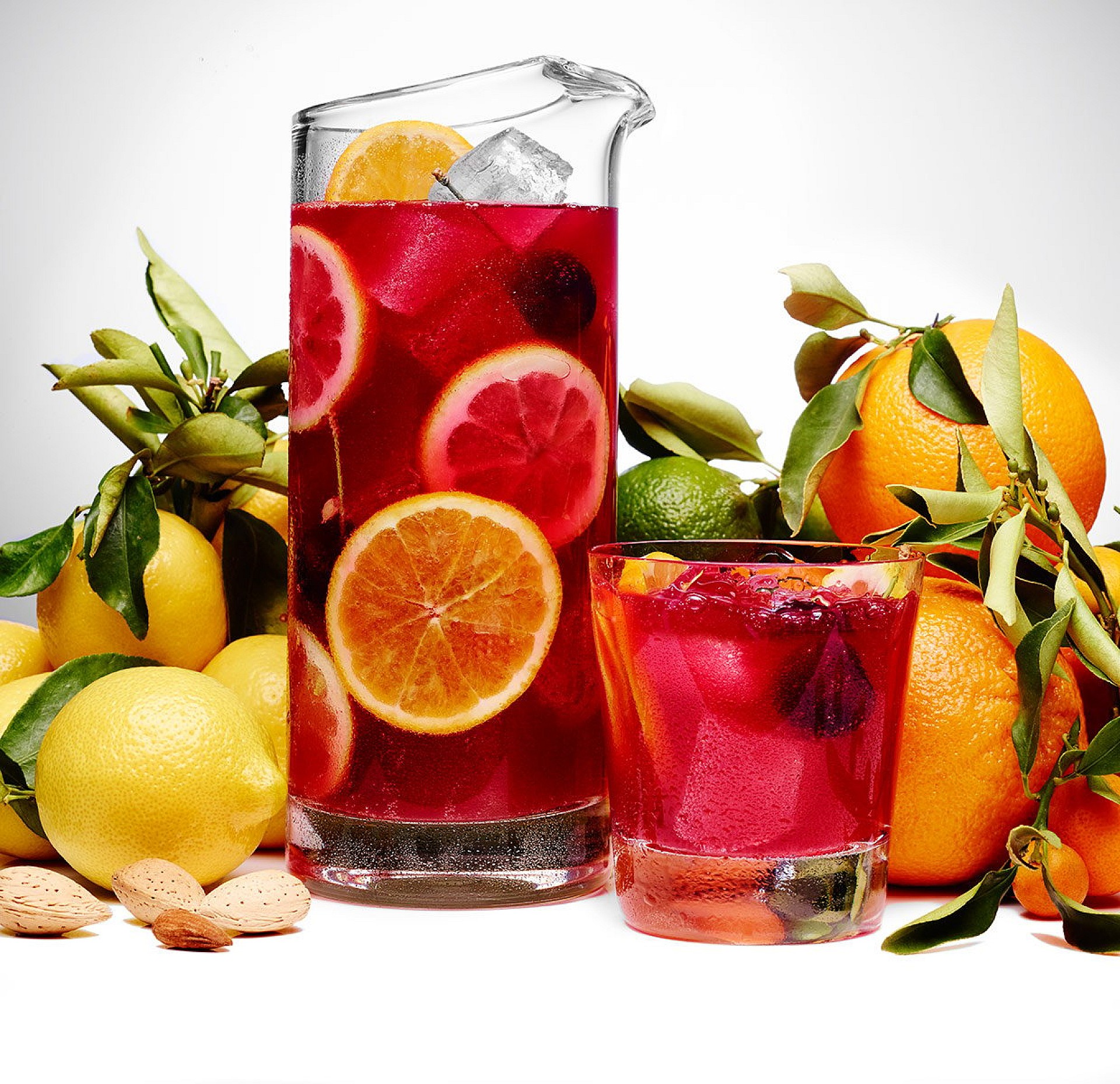
Necessity knows no law. That unwritten rule was the reason why today’s tourist in Spain so gladly indulges in a glass (or a jug, or several) of sangria. It was the Romans who, thousands of years ago, introduced the original version of sangria. The reason was simple: drinking water was full of bacteria. That’s why it was mixed with wine, which was already being produced on a large scale in Spain at the time. The addition of some herbs and spices made the drink even safer to consume and also enhanced its flavor.
When holidaymakers today order a sangria, it is still uncertain which version will be served on the terrace. There are no fixed rules about what ingredients the drink must contain. “Anything goes” may be a bit of an exaggeration, but a standard recipe has never been established. For ages, the “fruit cocktail” has consisted of oranges, lemons, and apples soaked in red wine, with possibly a sweetener such as sugar or syrup. Adding a splash of brandy or orange liqueur has also long been common practice, as well as some sparkling water for a refreshing kick.
Although sangria has such a long history, its popular breakthrough only came in 1964. Ironically, it was an event in New York that elevated the drink to a Spanish symbol—during the World Fair. Local restaurants, familiar with the mixed drink, introduced it to an enthusiastic world press. Since then, sangria—until then mostly popular at parties and family gatherings in Spain—became a sought-after exotic drink among tourists. That was the starting point for many innovations: white wine (clarea) and cava were used as a base, and the fruit mix was expanded with peaches, nectarines, limes, berries, pears, and watermelon. As mentioned, there are no fixed rules for sangria.
But the reasons why sangria has never matched the popularity of tapas among Spain visitors go deeper than the lack of a clear definition. Reason one: Spaniards still see it as a drink for special occasions. Reason two is even more telling: to make a good sangria, time is needed—for the flavors of fruits, herbs, and spices to blend with the wine. That’s why many bars and restaurants don’t even have it on the menu. And where it is served, it is often a weak version, because the mixing time was too short.
Tinto de verano has become a popular alternative for disappointed sangria drinkers. This red wine with ice, casera (sweetened soda water), or lemon soda is much easier to prepare and makes a refreshing summer drink. But beware of trendy bars where a splash of vermouth and an orange slice are added to tinto de verano—then it is sold at double the price as a “house sangria.”


